Materials, ethics & sleep
Naturepedic Materials Under the Microscope: How to Check for Animal-Derived Components
A mattress can be organic, thoughtfully made and still leave a vegan shopper with unanswered questions. The most reliable way to assess a Naturepedic mattress is to examine the materials in the exact model—and configuration—you are considering, then ask for clarification wherever the disclosure falls short.
Published October 23, 2026
There is a particular pleasure in finding a product whose promises seem to align: organic fibers, a considered construction, a reassuring certification, a clean-lined description. But ethical purchasing asks for more than an attractive materials story. For shoppers avoiding animal-derived ingredients, the decisive question is not whether a mattress sounds natural or responsible. It is what is actually in it.
Naturepedic is a mattress brand carried by veganmattress.net, but a brand name—or a broad description of a company’s approach—cannot establish whether every product meets an individual shopper’s vegan criteria. Materials may vary by model, size, production version, or construction option. Even a product described as cotton-based may include other components that merit closer inspection.
This guide offers a practical, product-level method for evaluating Naturepedic materials. It explains which ingredients to look for, why organic claims and vegan claims are not interchangeable, how to interpret a certification without asking it to prove more than it does, and what to ask the manufacturer when the published information is incomplete.
Begin with the exact product, not the brand story
Start with the full name of the mattress and its current product page. Record the model, size, and any construction or firmness option. If the listing describes several versions together, note that too: a shared page may cover products with different internal materials. Save or print the materials information with the date you reviewed it. Product descriptions can change, and a record makes later follow-up more precise.
Look beyond the headline and short description. The useful details often appear in sections labelled “materials,” “construction,” “specifications,” “certifications,” or “frequently asked questions.” A complete review considers the whole product, not just the sleep surface. That can include the cover, filling, support core, fire barrier, adhesives, coatings, waterproofing, thread, and any treatment applied during manufacturing.
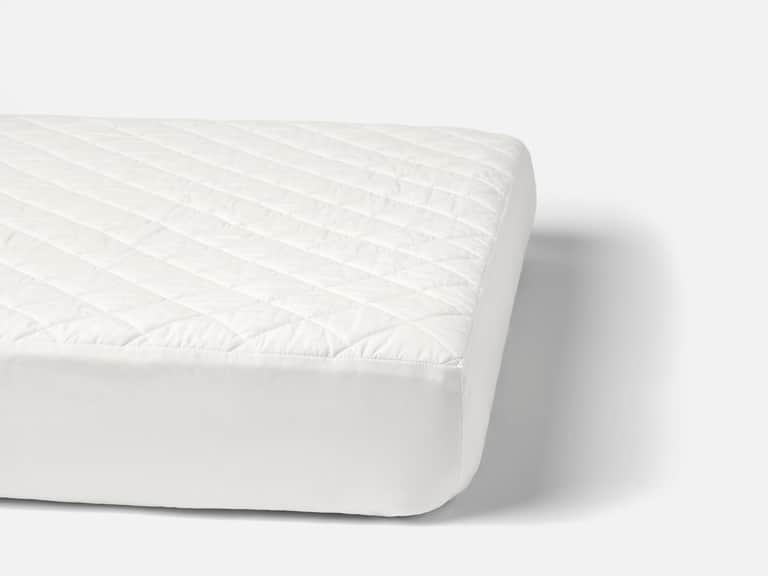
For example, the available listing for the Naturepedic Lightweight Organic Cotton Crib Mattress describes organic cotton, a polyethylene waterproof surface, a support system, and a fire-protection system. It also says the mattress contains no wool, latex, or soy. Those are useful product-level details, but the fire-barrier description in the listing is broad. A shopper who requires confirmation that every component is free of animal-derived materials should ask what that barrier consists of and whether any other animal-derived processing inputs are used.
This is not a verdict for or against a product. It is a reminder that a disclosure can be informative while still leaving a relevant question unanswered. A careful assessment separates what the listing explicitly states from what a buyer would need to confirm.
Organic, natural and vegan describe different things
Words such as “organic,” “natural,” and “non-toxic” often appear together in bedding marketing, but they answer different questions. Organic certification generally concerns defined agricultural and processing standards within the scope of the particular certification. “Natural” is a broad description and may not tell you the source of every ingredient. A product safety or emissions standard may address chemical or indoor-air criteria. None of those terms, on its own, proves that no animal-derived material is present.
Vegan suitability is a separate materials question: does the finished product contain an ingredient or component derived from an animal, according to the shopper’s chosen standard? Wool is a clear example of an animal-derived fiber. Other materials may be less obvious, including silk, down, feathers, leather, or certain animal-derived binders and processing aids. Some inputs may not be listed in a consumer-facing description, which is why direct questions can matter.
That distinction cuts both ways. A mattress made with organic cotton is not automatically vegan simply because the cotton is plant-based; its other components still need review. Conversely, a product’s lack of organic certification would not by itself establish that it contains animal materials. Ethical attributes should be assessed independently rather than treated as a single all-purpose label.
A materials checklist for mattress shoppers
Use the following checklist as a first pass. It is not a substitute for manufacturer confirmation when the wording is vague, but it helps turn a broad ethical concern into specific, answerable questions.
- Fibers and filling: Check for wool, cashmere, silk, down, feathers, or other animal fibers. Look at both the comfort layers and the outer fabric.
- Support materials: Identify the core and any cushioning layers. Natural latex is generally made from rubber tree sap, but verify the product’s specific materials and whether it is blended with other ingredients.
- Fire barrier: Ask for the barrier’s material composition if the listing uses general phrases such as “natural,” “plant-based,” or “non-toxic” without naming the fiber or components.
- Adhesives and binders: Ask whether adhesives, binders, or laminating agents are used and whether any are animal-derived. A finished product description may not enumerate these inputs.
- Coatings and waterproofing: Check the composition of waterproof layers, stain-resistant treatments, and other surface finishes. Do not assume that a named material answers every question about its additives or processing.
- Thread and minor components: Where relevant, check sewing thread, labels, tufting materials, and any included accessory. Small components can be overlooked in otherwise detailed descriptions.
- Model-specific variations: Confirm that the answer applies to your exact model, size, and version—not merely to a related product or the brand’s general range.
The goal is not to presume that every undisclosed ingredient is animal-derived. It is to avoid treating silence as proof either way. “Not listed” means the shopper does not yet have enough information to make a confident determination.
How to read a product disclosure without overreading it
A strong product disclosure names materials plainly and explains where they appear. “Organic cotton cover” is more useful than “made with natural materials,” but it still describes only the cover unless the manufacturer says otherwise. Similarly, “no wool” is meaningful evidence about wool; it is not automatically a statement about adhesives, fire barriers, or every other animal-derived input.
Pay attention to the difference between a material statement and a marketing summary. A product page may use a phrase such as “plant-based fire protection” while leaving the exact fiber unspecified. That wording points toward a source, but it does not necessarily answer whether the finished component or its processing involves other ingredients. Ask for the actual material name and, if needed, a statement about animal-derived content.
Also distinguish between a product’s material composition and its supply-chain practices. A company may publish information about sourcing, manufacturing, or environmental standards that is relevant to a broader ethical decision. Those commitments can be valuable, but they do not replace a direct answer about the ingredients in a particular mattress. Keep each question in its proper lane.
What certifications can—and cannot—tell you
Certifications can help shoppers evaluate specific attributes, but their meaning depends on the standard, the product or component covered, and the wording of the claim. A certification associated with organic fibers, for example, should not be assumed to certify the entire finished mattress as vegan. Nor should an emissions, chemical-safety, or flammability-related claim be read as a declaration about animal-derived ingredients unless the standard explicitly covers that issue.
When a product page displays a certification, look for the organization’s name, the scope of the certificate, and the item or materials included. If the certificate is available, check whether it applies to the finished product, a particular fiber, or a manufacturing process. A logo without context may tell you that a claim has been assessed in some way, but not necessarily answer the precise question you are asking.
For vegan verification, seek a certification or written statement that clearly addresses animal-derived materials and applies to the specific product. If no such evidence is available, you can still make an informed decision using a complete ingredient disclosure and direct answers. Certification is a useful tool, not a substitute for understanding its boundaries.
Questions worth sending to the manufacturer
A concise, specific inquiry is more likely to produce a useful response than a general question such as “Is this mattress vegan?” The word “vegan” can be interpreted differently, while questions about materials invite a product-level answer. Include the exact model name and link, and ask about the areas that remain unclear.
- Does this exact model, size, and current version contain wool, silk, down, feathers, leather, or any other animal-derived material?
- What are the complete materials in the fire barrier, including any fiber blends?
- Are animal-derived adhesives, binders, coatings, finishes, or processing aids used in making this product?
- Does the answer apply to all components, including the cover, filling, support system, and waterproof layer?
- Has the product’s composition changed recently, and does the published disclosure reflect the current version?
- Can you provide a written materials specification or documentation that supports the response?
Ask for a clear distinction between “not intentionally added,” “not present in the finished product,” and “not used in manufacturing.” Those statements are not necessarily equivalent. If your personal standard includes processing aids or supply-chain practices, say so; a manufacturer may answer a narrower composition question otherwise.
Keep the response, the date, and the name or department associated with it, if provided. There is no need to turn the exchange into an investigation; a simple, orderly record helps you compare information and revisit it if the product changes.
A practical decision framework
Once you have collected the product page and any replies, sort the evidence into three categories: confirmed, unclear, and outside your criteria. This makes the decision less dependent on impressions.
- Confirmed: The product disclosure or written manufacturer response identifies the relevant materials and answers your animal-origin questions for the exact model.
- Unclear: A component is described only in general terms, the answer applies to a different product, or the manufacturer cannot confirm a material’s source.
- Outside your criteria: A disclosed ingredient conflicts with your personal standard, regardless of whether the product meets other environmental or safety claims.
This framework allows for different levels of assurance. One shopper may be comfortable with a detailed materials list and a direct written response. Another may require an independent vegan certification or documentation covering manufacturing inputs. Neither approach needs to be framed as universal; the important point is to know what evidence supports your own decision.
A note on crib mattresses and family purchases
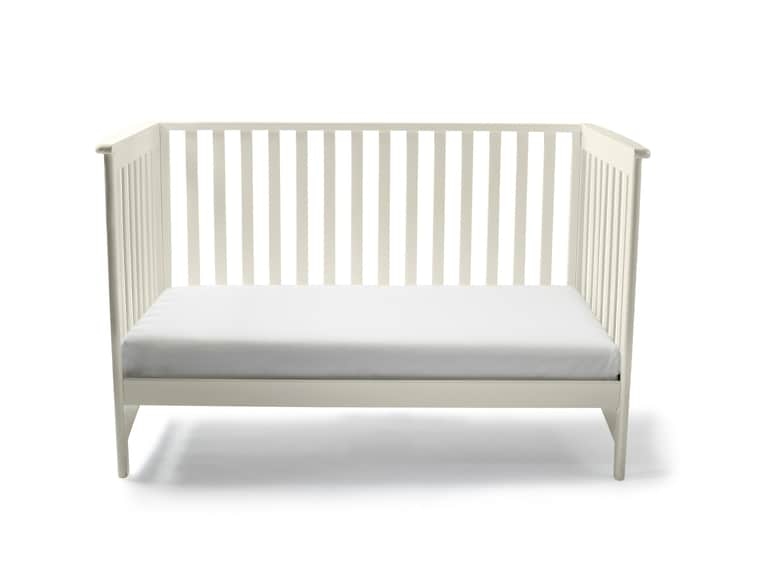
When assessing a crib mattress, the same material questions apply, but they sit alongside separate considerations about fit, firmness, care, and applicable safety requirements. Those considerations should not be conflated. A product’s safety features do not establish vegan composition, just as a vegan material profile does not by itself establish suitability for a particular sleep setting.
The Naturepedic crib mattress listing linked above describes a cotton-based construction and states that it contains no wool, latex, or soy. For a shopper specifically checking animal-derived materials, the stated absence of wool is relevant. The listing’s more general description of its fire-protection system is a sensible place to request detail. Ask about the barrier’s ingredients, any adhesives or processing inputs, and whether the answer applies to the current model you plan to purchase.
Carefully reviewing a product’s composition is especially useful when the bed is being bought for a household with multiple ethical, practical, or health-related priorities. A written record lets family members compare the same information rather than relying on a simplified headline or a remembered conversation.
Common assumptions to leave behind
“Organic means vegan.” It does not. Organic status and animal-derived content are separate questions.
“Natural means plant-based.” Not necessarily. Wool is natural and animal-derived; a natural-material claim needs a component-by-component reading.
“A brand’s values settle the question.” A company’s overall commitments may offer context, but specific products can differ. Verify the exact mattress.
“If wool is absent, everything else must be vegan.” Wool is only one possible animal-derived component. Review the remaining materials and ask about undisclosed inputs.
“A certification logo answers every ethical question.” Each certification has a defined scope. Check what it covers rather than extrapolating beyond it.
“If a material is not mentioned, it is absent.” An incomplete listing is not evidence of absence. Treat gaps as questions to resolve.
The considered purchase is the better-informed one
Evaluating Naturepedic materials for animal-derived components does not require a sweeping judgment about the brand. It requires a precise look at the product in front of you. Start with the full materials list, separate organic and safety claims from vegan criteria, identify vague components, and request specific confirmation from the manufacturer.
For the Naturepedic Lightweight Organic Cotton Crib Mattress, the available listing offers several concrete details and names some materials it says are not included. It also leaves room for a focused follow-up about the fire barrier and any other components not fully itemized. That is a productive place to pause: not to assume, but to ask.
In a market where “clean,” “natural,” and “responsible” can carry many meanings, transparency is not a decorative extra. It is the foundation of a decision that reflects your own values. Read closely, verify calmly, and let the evidence—not the adjective—guide the choice.
Quick verification checklist
- Identify the exact model, size, and version.
- Review the complete materials list, including less visible components.
- Check organic, safety, and vegan claims as distinct categories.
- Ask specifically about unclear fibers, fire barriers, adhesives, coatings, and processing aids.
- Request a written, product-level response and save it with the date.
- Decide what level of evidence meets your personal standard before comparing products.